Scott Walterman : Voice of America
| Total Responses: | 2 |
| Average Quality Score: | 76.0 |
| Average Bias Score: | 4.0 |
| gen: 2026/07/22:05:40 in 3 min 28.4 sec (old)bias: 4 (Center-Left) |
| type: lolsquality: 74 |
| pts: 0 |
 | author: | Scott Walterman | institution: | Voice of America | ¿porque no los dos? |
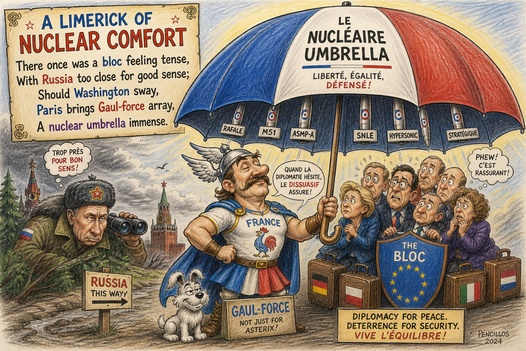
| tl;dr | A Voice of America (VOA) “The Issue” episode/article (March 6, 2025) by Scott Walterman reports that France is proposing its nuclear deterrent as a way to help protect Europe against Russia, amid concerns that the United States could reduce its security commitment under President Donald Trump. The framing emphasizes European anxiety about U.S. reliability and highlights French President Emmanuel Macron’s intent to discuss the idea with EU leaders. | ||||
| deeper: | Content & framing: The headline and lede frame Russia as the primary threat (“protect Europe from Russia”) and present France’s nuclear deterrent as a prospective solution, which is a defensible news frame given the post-2022 European security context. The visible text also foregrounds a political premise—European leaders fear being “cut … adrift” by the U.S. under President Trump—without showing, in the screenshot, balancing language that would test that claim (e.g., references to stated U.S. policy, NATO commitments, or countervailing views from U.S. officials). Bias: The piece appears to lean mildly toward a pro-EU strategic autonomy perspective (treating U.S. retrenchment as plausible and Russian threat as central) and uses emotionally loaded phrasing (“cut … adrift”). However, it is not overtly ideological in the portion shown; it reads like mainstream security reporting, hence a moderate (not high) bias score. Quality: As presented, it’s a VOA program page with an audio segment (~17 minutes). The topic is timely and clearly stated; author and date are provided. Quality is limited in this screenshot by the lack of visible sourcing, direct quotations, and presentation of opposing arguments (e.g., Russia’s response, NATO nuclear-sharing context, French doctrine constraints, and critique from European states wary of nuclear escalation). If the audio includes multiple expert voices and hard details, quality would rise; based on what’s visible, it’s solid but not deeply evidenced. What would strengthen it: explicit sourcing for the U.S.-retrenchment premise, concrete description of what France is actually proposing (political guarantee vs. operational nuclear posture), legal/doctrinal limits of France’s force de frappe, reactions from key EU/NATO members (Germany, Poland, Baltics), and a clearer distinction between deterrence signaling and actual defense commitments. | ||||
media: | |||||
| gen: 2026/07/21:05:43 in 1 min 7.5 sec (old)bias: 4 (Center-Left) |
| type: newsquality: 78 |
| pts: 0 |
 | author: | Scott Walterman | institution: | Voice of America | ¿porque no los dos? |
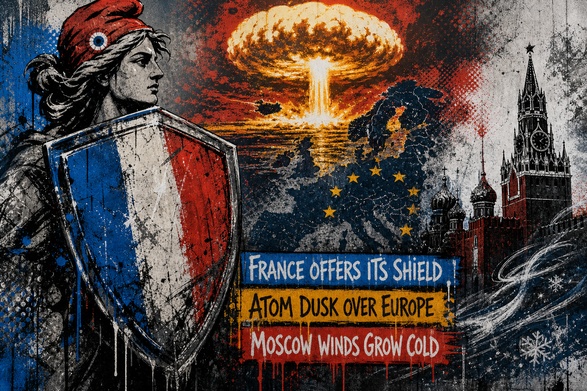
| tl;dr | A Voice of America episode reports that French President Emmanuel Macron is exploring talks with EU leaders about extending France’s nuclear deterrent to protect Europe from Russia. The piece frames the idea amid concern that a future Trump-led United States might be a less reliable defender of Europe. It highlights the concept of a French-led nuclear umbrella for the EU as a response to Russia’s threat. | ||||
| deeper: | The article’s headline and lede are factual and newsworthy, and the sourcing appears tied to on-record statements about Macron’s proposal. However, the framing foregrounds European anxiety about Donald Trump potentially abandoning Europe, which nudges the narrative toward a skeptical view of a Trump-led U.S. without equal space for countervailing arguments (e.g., NATO treaty obligations, current U.S. defense policy, the role of the UK’s nuclear deterrent, or European skepticism toward a French nuclear umbrella). More balance would include perspectives from NATO officials, central/eastern European governments, and defense analysts on feasibility, command-and-control, costs, and legal constraints. Still, the piece communicates the core development clearly and situates it within the Russia threat context, giving it solid but not exhaustive quality. | ||||
media: | |||||
You made it to the bottom. Now dance!


owned and operated by: RPN Omnigalactic Insitutution as of: 2026/10/16: 23:20 in 0 ms
Enter Code
Login with Account